
⚡ Quick Answer: What is India’s Youth Unemployment Rate in 2026?
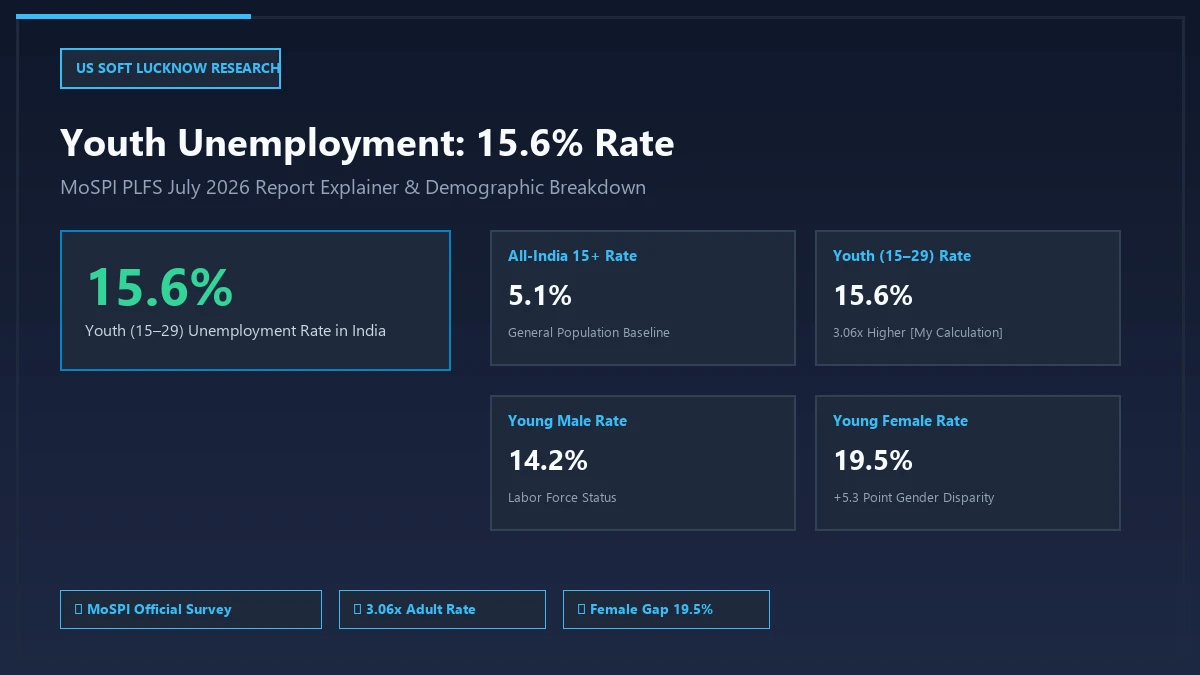
According to the official Periodic Labour Force Survey (PLFS) July 2026 released by the Ministry of Statistics and Programme Implementation (MoSPI), the unemployment rate for Indian youth aged 15 to 29 years stands at 15.6%. This is more than three times the general adult unemployment rate of 5.1% (for ages 15+). The youth male unemployment rate is recorded at 14.2%, while youth female unemployment reaches 19.5%.
When evaluating career prospects in India, official government labor statistics provide a sobering baseline. Millions of young citizens graduate every year with formal degrees, yet find themselves navigating a competitive, skill-disrupted job market.
As covered in our foundational career study on Digital Marketing Career India 2026: Jobs & Salary Guide, the high youth jobless rate is not a lack of industry demand, but a fundamental misalignment between traditional degree syllabi and modern digital workplace requirements.
The 3x Youth Disparity: Decoding MoSPI PLFS July 2026
The headline metric that economists track is the ratio between youth and adult unemployment:
- General Unemployment Rate (15+): 5.1%
- Youth Unemployment Rate (15–29): 15.6%
- [My Calculation]: The youth unemployment rate is 3.06 times higher than adult unemployment (15.6% ÷ 5.1%). This means an educated young Indian under 30 is three times more likely to be seeking work than an older worker with established tenure.
📊 Key National Employment Indicators (MoSPI PLFS July 2026)
| Labor Market Indicator | Reported Rate (%) | Statistical Definition | Economic Insight |
|---|---|---|---|
| General Unemployment (15+) | 5.1% | Unemployed ÷ Active Labor Force | Broad national baseline across all ages |
| Youth Unemployment (15–29) | 15.6% | Ages 15–29 Seeking Employment | 3.06x higher than general rate [My Calc] |
| Youth Male Unemployment | 14.2% | Male Labor Force (15–29) | Reflects competitive urban graduate pool |
| Youth Female Unemployment | 19.5% | Female Labor Force (15–29) | +5.3 point gender gap across youth |
| Labor Force Participation (LFPR) | 41.2% | Working or Seeking Work ÷ Population | Portion of youth actively in job market |
| Worker Population Ratio (WPR) | 34.8% | Employed Citizens ÷ Total Population | Actual productive employment share |
Understanding LFPR and WPR in Simple Terms
To properly interpret unemployment data, one must understand how government statisticians calculate it:
- Labor Force Participation Rate (LFPR – 41.2%): Represents the percentage of young citizens who are either currently working or actively seeking employment. Students enrolled in full-time colleges are excluded from the labor force.
- Worker Population Ratio (WPR – 34.8%): Measures the percentage of total youth who actually hold productive employment.
- Methodological Caveat: MoSPI advises that post-2025 PLFS data series utilize refined sampling weights and urban classification frameworks, making direct historical comparisons with 2018–2020 estimates imprecise.
Overcoming the Odds: The Digital Skills Bridge
While 15.6% of youth face unemployment, specialized sectors are experiencing severe talent shortages. As detailed in our analysis of Marketing Hiring +12% vs Unemployment Paradox, youth who acquire verifiable digital execution skills (Google Ads, Meta media buying, technical SEO) successfully bypass broad graduate competition.
Build employment-ready digital marketing competencies at US Soft Lucknow.
Frequently Asked Questions (FAQ)
What is the youth unemployment rate in India according to PLFS 2026?
According to the MoSPI PLFS July 2026 report, the youth unemployment rate (ages 15–29) in India is 15.6%, compared to 5.1% for the overall population.
Why is youth unemployment higher than overall unemployment?
Youth unemployment is higher because new graduates face a structural skills gap, lacking practical industry experience and technical competencies demanded by modern employers.